Every gardener I know has a companion planting rule they swear by. The woman who runs the plant sale at the library puts marigolds around everything. My neighbor up the road will not let an onion within ten feet of his beans. I have tried most of these rules over the years, and some of them seem to help, some do nothing I can measure, and a few just make the garden look nicer, which is not nothing.
What finally made it useful for me was drawing it out. A chart of good and bad neighbors is one thing, but you still have to decide where every plant actually goes. So here is the layout I use in one of my 4 by 8 foot beds, how I plan it, and the chart I work from, with one honest warning attached. A lot of companion planting is tradition and gardener experience rather than hard science. Some pairings have good research behind them. Many have little or none, and the results change with your soil, your climate and your pests. Treat all of this as a starting point and keep notes on what happens in your own yard.
My Companion Planting Garden Layout
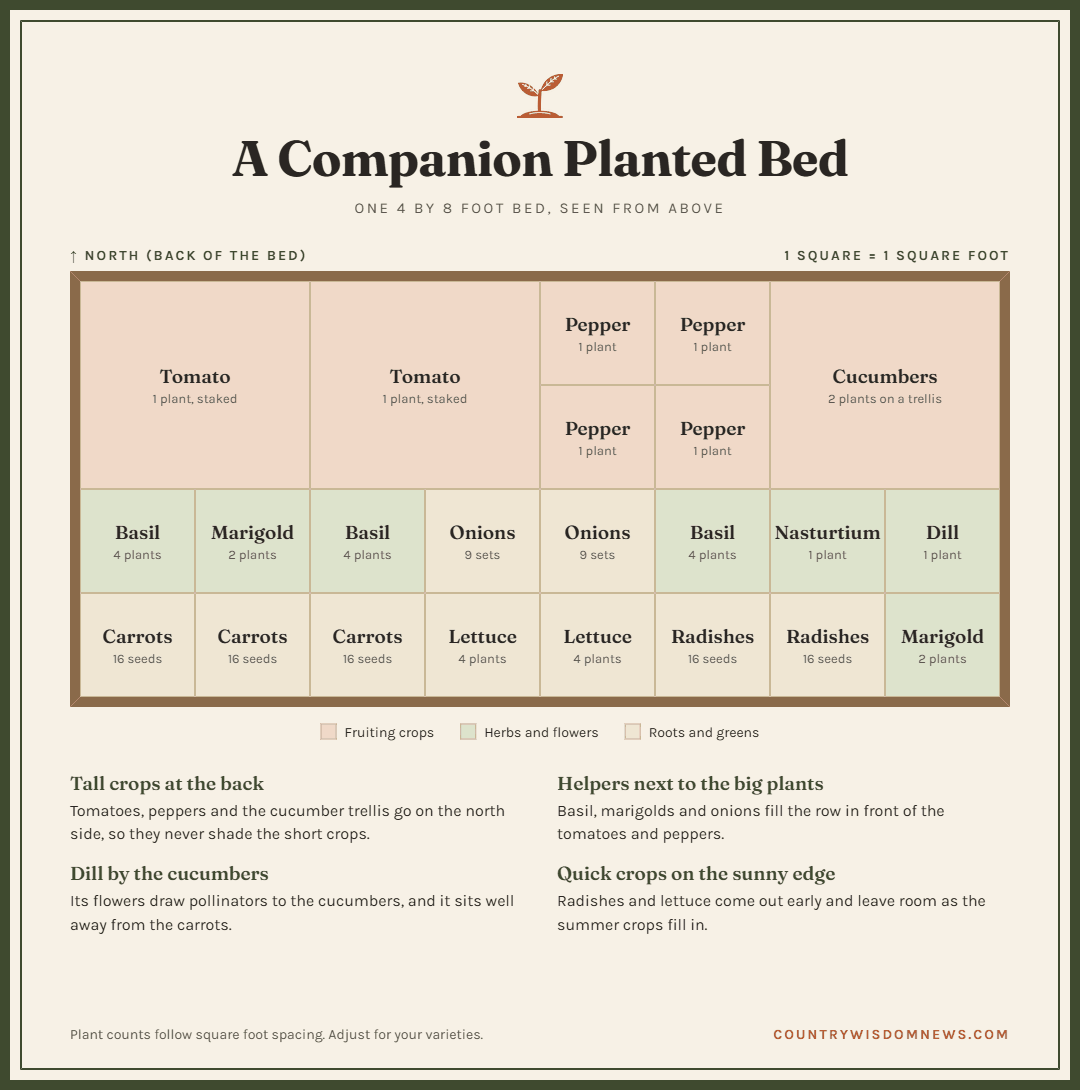
This is one bed, seen from above, with each square standing for a square foot. The back of the bed faces north. Here is the thinking behind it.
- Tall crops at the back. Two staked tomatoes, four peppers and a cucumber trellis take the north half, so their shade falls on the path and not on anything else in the bed.
- Helpers right in front of them. Basil, marigolds and a couple of squares of onions fill the row in front of the tomatoes and peppers. The basil gets picked all summer anyway, so it might as well be where I am already reaching.
- Dill by the cucumbers, not the carrots. Flowering dill brings in pollinators that the cucumbers need, and tradition says it does carrots no favors, so the two sit at opposite ends.
- Quick crops on the sunny edge. Carrots, lettuce and radishes take the south row, where nothing taller shades them. The radishes are out in a few weeks, and I resow lettuce in their place.
- No beans in this bed. Beans and onions are one of the pairings people most often keep apart, so my beans go in a different bed with the corn.
How to Plan Your Own Layout
1. Start with the sun
Figure out which side of the bed faces north, and put your tallest crops there. In a bed that runs east to west, that is the whole back row. In one that runs north to south, put the tall plants at the north end.
2. Place the big crops first
Tomatoes, peppers, squash and cucumbers take the most room and stay put all season. Give them their full spacing before you place anything else. Squash in particular will swallow a bed if you let it.
3. Tuck the helpers in close
Herbs and flowers go in the gaps around the big crops: basil near the tomatoes, dill and a few flowers near anything that needs pollinators, marigolds or nasturtiums along the edges.
4. Fill the edges with fast crops
Radishes, lettuce and other quick greens go along the front edge or between slow crops. They are harvested before the bigger plants need the room.
5. Check the keep apart list last
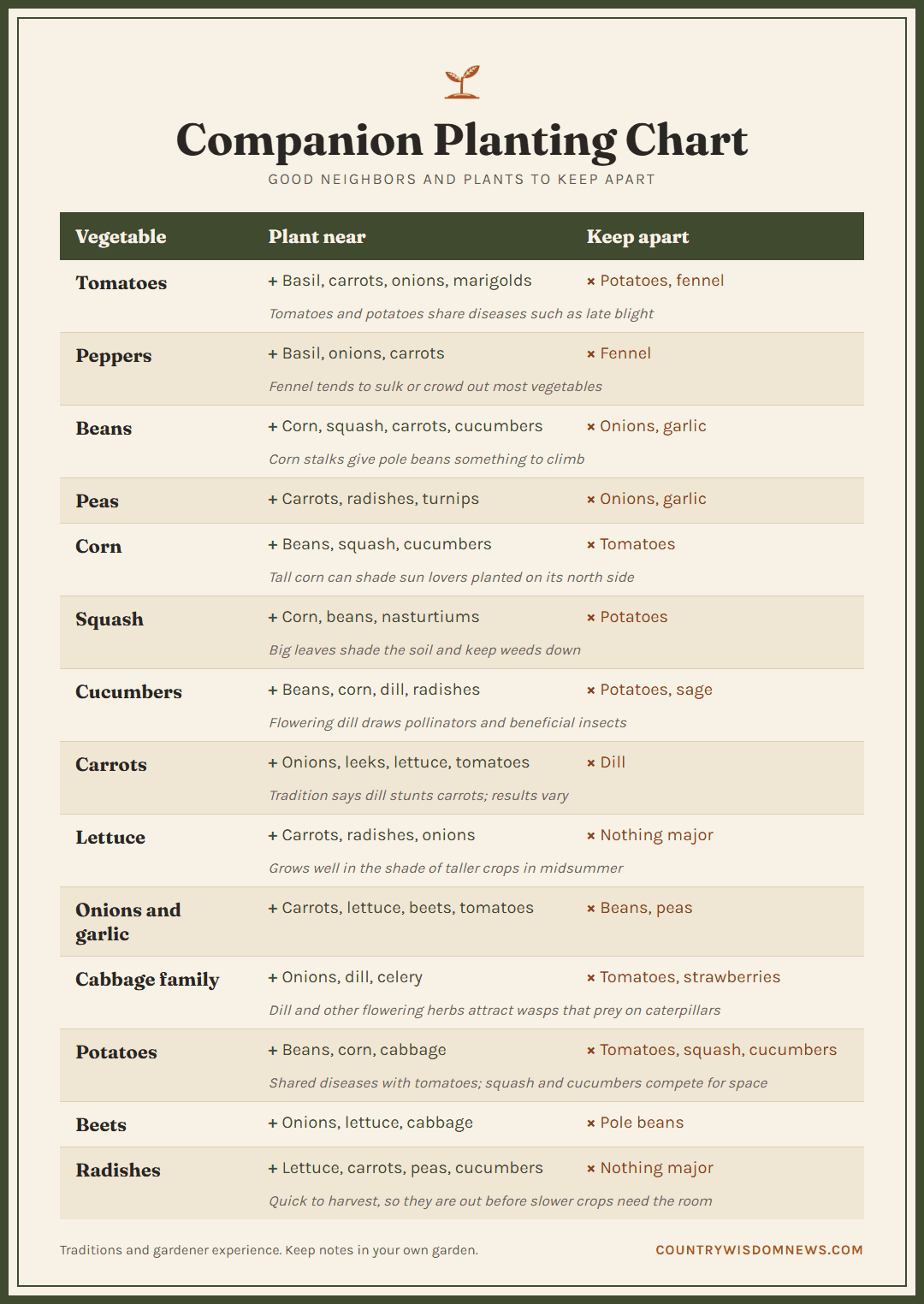
Before you plant, run down the chart below and make sure nothing that is better kept apart ended up side by side. It is easier to move a seedling on paper than in June.
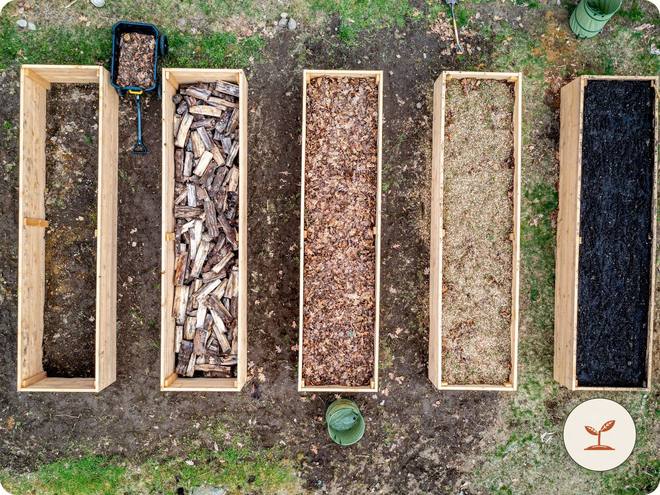
If you are working with a small space, like the 4-foot-wide beds I wrote about in how to fill a raised garden bed, this kind of layout gets you a lot more food out of the same soil.
The Chart I Plan From
What Actually Works
When I sort through the pairings that have held up for me, the reliable benefits are almost all practical ones.
Spacing and timing
Fast crops tucked between slow ones make good use of a bed. Radishes sown alongside carrots come out in a few weeks, right about when the carrots start needing the room. Lettuce planted on the shady side of tomatoes keeps going a little longer into summer before it bolts.
Shade, on purpose
Tall plants cast shade, and that cuts both ways. Put corn or trellised beans where their shadow falls on crops that like a break from the afternoon sun, not on the peppers that need every hour they can get.
Pollinators and helpful insects
This is the one I put the most stock in. Letting dill, cilantro and a few flowers bloom near the vegetables brings in bees and the small wasps and flies that feed on garden pests. Squash and cucumbers need pollinators to set fruit, so a few flowers close by can be worth the space.
Keeping disease from spreading
Tomatoes and potatoes belong to the same family and share some of the same diseases. Keeping them apart, and rotating where you plant them each year, is ordinary good sense with or without the companion planting label.
The Three Sisters
The best known companion planting layout of all is the Three Sisters of corn, beans and squash, grown together by Native American farmers long before anyone drew up a chart. Corn grows tall and gives the beans a pole to climb. The beans add some nitrogen to the soil over time. The squash sprawls underneath, shading out weeds and holding moisture in the ground.
If you try it, plant the corn first and give it a head start of a couple of weeks, until it is several inches tall. Then sow pole beans around each corn hill and squash in the spaces between. Plant corn in a block of several short rows rather than one long line, since it is pollinated by the wind and does better with neighbors on all sides.
Last summer my Three Sisters patch went sideways when the squash outgrew everyone and swallowed two of the corn hills. The beans did not seem to mind. The corn I was able to find was still good.