
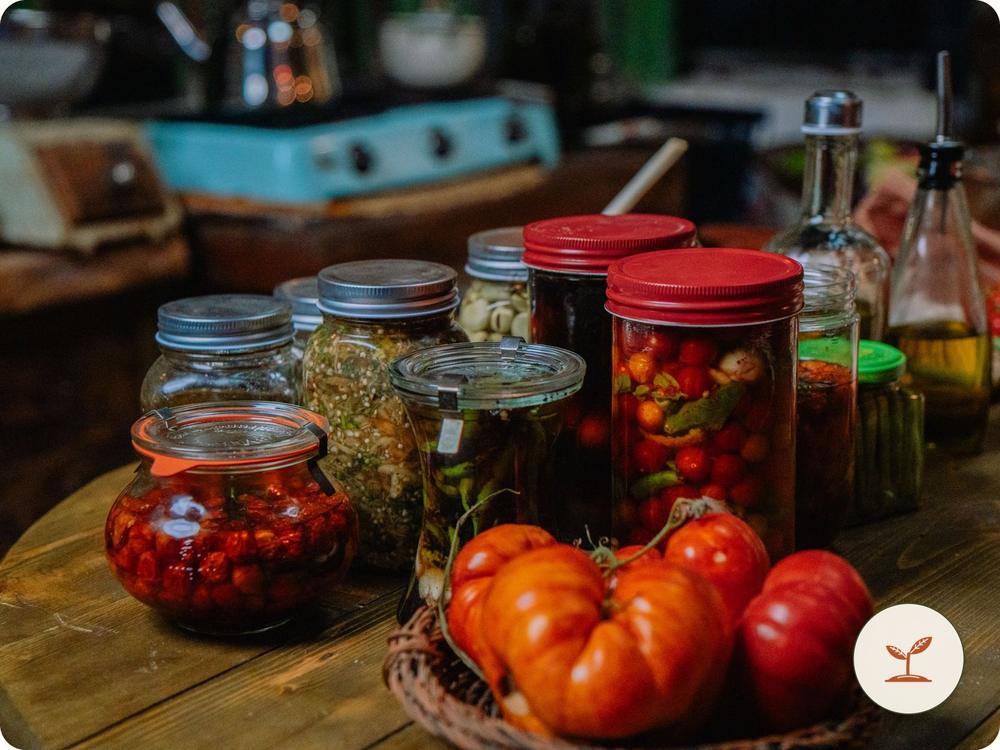
By late August my kitchen counter disappears under tomatoes. The basil I planted beside them has long since gone to flower, the vines are leaning on their stakes, and every morning there are more red ones than I can possibly eat fresh. That is when the big pot comes down from the shelf.
My grandmother called this putting up tomatoes, and she did it the old fashioned way: a big enamel pot, a rack, a kitchen full of steam and jars lined up on a towel. The equipment has hardly changed since. What has changed is what we know about acid, and a couple of her habits that turned out not to be safe.
Water bath canning tomatoes is not hard, but it is one of those jobs where you follow the tested method exactly and leave your creativity for the dinner table. What follows is how I put up crushed tomatoes in a boiling water bath, based on the tested guidance from the USDA and the National Center for Home Food Preservation. If anything here ever seems to differ from their published instructions, go with theirs.
Why Tomatoes Need Added Acid
People tend to think of tomatoes as acidic, and many are, but not reliably enough for a boiling water bath on their own. Some varieties, and tomatoes that are very ripe, can sit right on the line. So every jar gets added acid, no matter which variety you grew or how tart they taste.
Use one of these per jar:
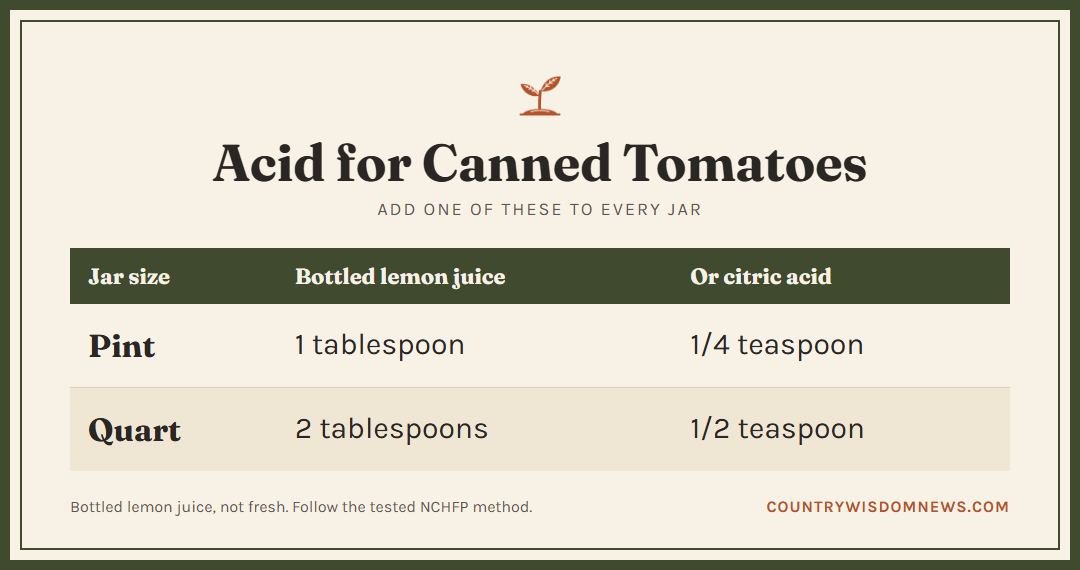
Use bottled lemon juice rather than fresh, because its acidity is standardized and fresh lemons vary. If the result tastes a little sharp, you can adjust when you cook with it later.
What You Need
- A large canner or deep stockpot with a rack, deep enough that the water covers the jars by at least an inch
- Canning jars, new lids and bands
- A jar lifter, a canning funnel and a clean, damp cloth
- A large heavy pot for cooking the tomatoes
- Firm, ripe tomatoes free of rot and mold
Choose sound tomatoes. Skip any from vines that have died or been killed by frost, and cut away bruised or soft spots.
Water Bath Canning Tomatoes, Step by Step
1. Get the canner and jars ready
Wash the jars, lids and bands in hot soapy water. Set the rack in the canner, put the jars in, and fill with water. Heat it so the jars stay hot until you fill them. Prepare the lids the way the manufacturer recommends.
2. Peel the tomatoes
Wash the tomatoes. Drop them into boiling water for 30 to 60 seconds, until the skins split, then move them straight into cold water. The skins slip right off. Cut out the cores and any bad spots, and cut the tomatoes into quarters.
3. Crush and heat
Put about a sixth of the quarters into your large pot over high heat and crush them with a wooden spoon or potato masher as they go in. This gives you some juice so nothing scorches. Once that comes to a boil, keep adding the rest of the quarters a few at a time, stirring the whole while. The later batches will soften as they cook and do not need crushing. When all the tomatoes are in, bring them back to a boil and let them boil gently for 5 minutes.
4. Add acid and fill the jars
Take one hot jar out of the canner at a time. Put the lemon juice or citric acid in the empty jar first. If you like, add 1 teaspoon of salt per quart or 1/2 teaspoon per pint, for flavor only.
Ladle in the hot tomatoes, leaving 1/2 inch of headspace between the top of the tomatoes and the rim. Run a clean plastic or wooden utensil around the inside of the jar to release air bubbles, and top up if the level drops. Wipe the rim with a damp cloth, set the lid on, and screw the band on fingertip tight.
5. Process in the boiling water bath
Lower the filled jars onto the rack. The water should cover them by at least an inch. Bring it to a full rolling boil, and only then start timing.
For crushed tomatoes with no added liquid, at altitudes up to 1,000 feet:
- Pints: 35 minutes
- Quarts: 45 minutes
If you live higher than 1,000 feet, the times are longer. Look up your altitude and check the tested tables from the National Center before you start. Plenty of country places sit higher than people assume.
Keep the water at a steady boil the whole time. If it stops boiling, bring it back up and start the timer over from the beginning.
6. Cool and check the seals
When the time is up, turn off the heat, take off the canner lid, and let the jars sit for 5 minutes. Then lift them out with the jar lifter, keeping them upright, and set them on a towel away from drafts. Leave them alone for 12 to 24 hours.
You will hear the lids ping as they seal. Once the jars are cool, press the center of each lid. If it does not flex, it has sealed. Any jar that did not seal goes in the refrigerator to be used within a few days, or can be reprocessed with a new lid within 24 hours.
Remove the bands, wipe the jars, label them with the date and contents, and store them somewhere cool, dark and dry.
Why a Water Bath and Not a Pressure Canner
You can pressure can tomatoes, and the tested tables from the National Center include times for it. I stick with the water bath because it needs nothing more than a big pot with a rack, and with the added acid it is a tested, safe method for plain crushed tomatoes. If you already own a pressure canner and know how to use it, follow its tested times instead. Just do not mix the two methods, and do not borrow times from one for the other.
Shortcuts to Skip
- Leaving out the acid. Not even for one jar.
- Oven canning or the open kettle method, where you pour hot food into jars and wait for the lids to seal. Plenty of grandmothers did it that way, mine included. Neither one is safe.
- Turning jars upside down to seal them instead of processing them.
- Adding onions, peppers or garlic to plain crushed tomatoes. Those change the acidity. If you want salsa or a seasoned sauce, use a tested recipe written for exactly that.
- Cutting processing time because the jars look done.
When you open a jar in winter, look before you use it. A lid that has come loose, a bulge, leaking, spurting liquid or an off smell means the jar goes out, contents and all, without tasting.
I keep a small notebook with each batch’s date, jar count and any jars that failed to seal. After a few years it tells me more about how many tomato plants I need than any seed catalog ever has.