

The farmhouse I grew up visiting had a root cellar dug into the hill behind the kitchen, with a heavy plank door and steps that were slick with damp no matter the month. My grandmother kept potatoes down there into spring. I do not have a hill or a plank door, and most people do not either. What I do have is an old unfinished basement, and one corner of it has done the same job for years without anyone picking up a shovel.
What a Root Cellar Actually Does
A root cellar keeps vegetables in conditions that slow them down. Four things matter:
- Cool. Most root crops keep best at about 32 to 40 degrees F. Warmer, and they sprout or soften. Below freezing, they are ruined.
- Dark. Light makes potatoes turn green and start sprouting. Green patches on potatoes are bitter and should be cut away generously.
- Humid. Root crops want high humidity so they do not shrivel. A dry space turns carrots into rubber.
- Ventilated. Stored produce gives off gases and moisture. Some air movement keeps mold and odors down.
A basement already does half of that work. The ground around the foundation stays cool and steady all winter, and it is dark down there anyway. The rest is a matter of keeping the house heat out and letting a little outside air in.
How to Make a Root Cellar in Your Basement
1. Find the coldest corner
Look for the corner farthest from the furnace and the water heater, ideally on the north side, where two outside foundation walls meet. A corner with a small basement window is even better, because that window becomes your vent later. Before you build anything, set a thermometer and a humidity gauge there for a week or two of cold weather. If it sits somewhere in the 30s and 40s, you have found your spot.
2. Wall it off from the house
Frame two short stud walls on the inside of the corner to close it in, so the two foundation walls form the other two sides. Insulate the new walls, the door and the ceiling, because those are the sides facing the warm house. Leave the foundation walls bare. The cold earth on the other side of that concrete is what does the cooling, and insulating it would just keep the cold out. My room is about six feet by eight, which holds more than one family eats in a winter.
3. Give it two vents
Air needs a way in and a way out. The simplest setup swaps the glass in the basement window for a piece of plywood with two pipes through it. The intake pipe runs down inside the room to near the floor, so cold air comes in low. The exhaust pipe stops just inside, up near the ceiling, so warmer, staler air can leave from the top. Open them on cold nights to bring the temperature down in fall, and close them when it gets near freezing.
4. Keep the humidity up
A bare concrete or gravel floor helps, since it holds damp. If the room still runs dry, set out a pan of water, sprinkle the floor now and then, or pack carrots and beets in crates of damp sand. A humidity gauge tells you more than guessing will.
5. Add shelves and bins
Slatted wooden shelves and crates let air move around the produce. Keep them an inch or two off the walls. Cold air settles, so the lowest shelves run coldest; I keep carrots and beets down low and the potato bins just above. Apples get their own shelf on the far side, for reasons below.
If walling off a room is more than you want to take on, shelves of slatted crates in that same cold corner still work better than most people expect. It is about the cheapest DIY root cellar there is.
What Stores Well
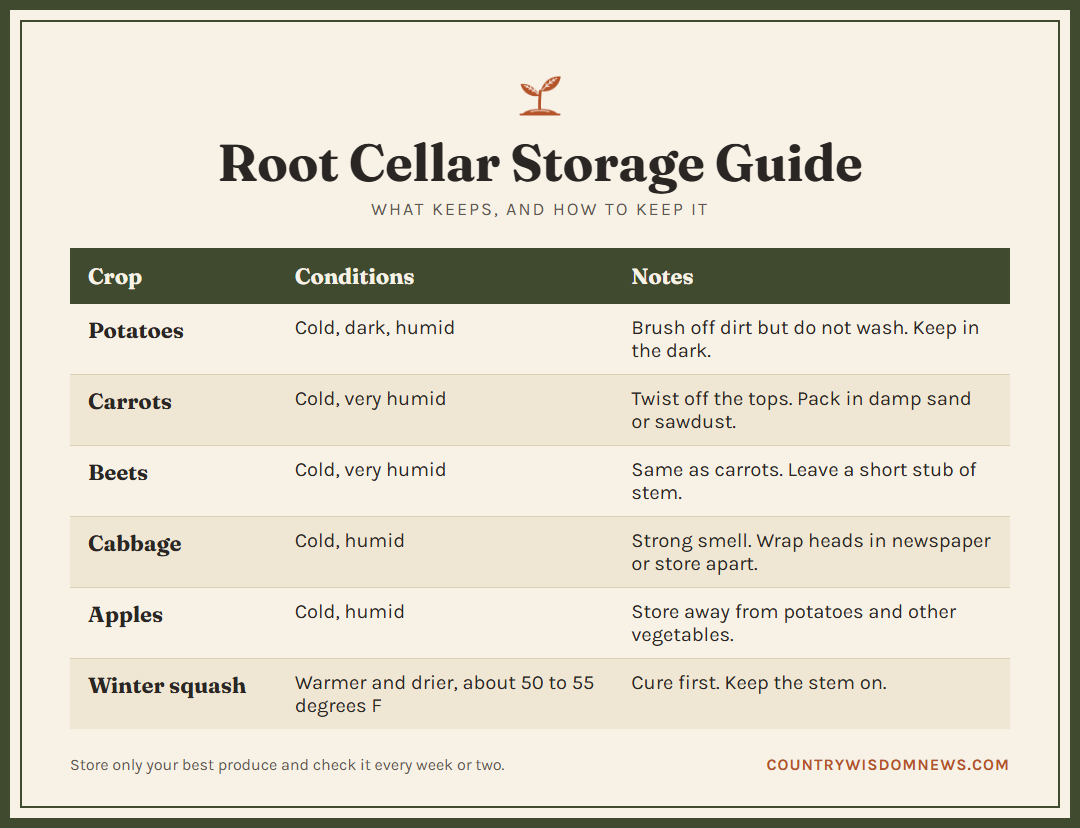
Store only your best produce. Anything bruised, cut by the fork or showing soft spots goes to the kitchen first, because it will not keep and it can spoil its neighbors.
Keep Apples Away from Potatoes
Apples give off ethylene gas as they ripen. Ethylene speeds up ripening and aging in nearby produce, and it can push potatoes to sprout early. Potatoes, in turn, can give apples an earthy taste. Give apples their own shelf or their own corner, as far from the potato bin as you can manage.
Winter Squash Is the Odd One Out
Squash and pumpkins do not want the cold damp that root crops love. Cure them first by leaving them in a warm, sunny spot for a week or two so the skins harden. Then store them somewhere drier and warmer, around 50 to 55 degrees F. A closet in a cool spare room or a shelf in a cool part of the house often works better than any cellar.
No Basement? Other Ways to Fake One
An unheated garage
A garage that stays cool but never drops below freezing can hold crops through much of the winter. Keep produce off the concrete and away from the door. When a hard cold snap comes, move things inside or cover them with old blankets.
Buried bins
An old metal trash can buried with its rim just above ground, filled with layers of root crops and straw, and topped with its lid and a thick pile of straw or leaves, makes a decent small root cellar. Make sure the can has a few drain holes so water does not pool in the bottom. Digging out carrots from under a snowbank in January is its own small pleasure.
Coolers
A picnic cooler set in an unheated space works in reverse of how it does in summer. It holds in humidity and buffers the vegetables from sudden cold. Pack carrots or beets inside in damp sand, close the lid, and check it every week or so.
Checking on Things
Whatever setup you use, look over your stored crops every week or two. Pull anything that is sprouting, softening or starting to mold. It really is true about one bad apple.
The year I started checking regularly, I lost far fewer potatoes and ate a lot more of them in March, when the ones at the store tasted like cardboard.